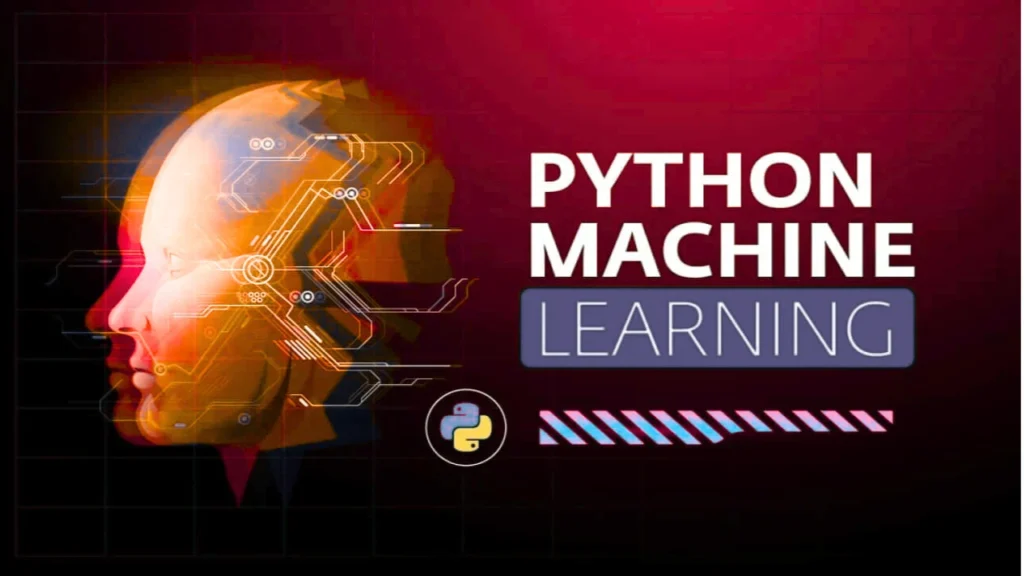
Python for Machine Learning
- Sehrish Khan(Trainer)
- 300+ (Graduates)
- Reviews
Unlock the power of Python in Machine Learning! Learn how to analyze data, build smart models, and apply AI in real-world scenarios. With hands-on training and practical tools, this course prepares you for the future of AI. Enroll now and level up with DUS Skills!
Rs. 30,000
- Course Duration: 3 Months
- Live Lectures
- 24/7 Support
- Group Discussion
- Lifetime Access
- Certificate of Completion
- 15 Days Refund Policy
DUS AI – Details & Registration
DUS Skills Python for Machine Learning Training
- This course is designed to equip you with practical Python and Machine Learning skills needed to start earning after completion. It’s an earning-focused program that enables you to offer data science and ML services on freelancing platforms, build intelligent solutions, and even monetize your own Python-based AI projects or tools.
- In today’s tech-driven world, Python has become one of the most essential and future-proof programming languages—especially in the field of Machine Learning. DUS Skills empowers learners with expert-led training in Python for Machine Learning, helping them stay ahead in the digital era through practical, career-focused education.
Module 1: Introduction
- What is Machine Learning (ML)?
- Types of ML: Supervised, Unsupervised, Reinforcement
- Python for ML: Why Python is preferred
- Setting up the environment:
- Anaconda
- Jupyter Notebook / VS Code
- Installing libraries (NumPy, Pandas, Matplotlib, Scikit-Learn)
Module 2: Python Basics for ML
- Variables & data types
- Loops, conditions & functions
- Lists, tuples, sets, dictionaries
- Comprehensions
- File handling (CSV, JSON)
- Modules & packages
Module 3: Python Libraries for ML
3.1 NumPy
- Arrays & operations
- Mathematical functions
- Random number generation
3.2 Pandas
- DataFrames & Series
- Importing/exporting datasets
- Data cleaning & preprocessing
- Handling missing data
3.3 Matplotlib & Seaborn
- Data visualization basics
- Line, bar, scatter plots
- Histograms & heatmaps
- Pair plots & correlation plots
Module 4: Data Preprocessing
- Data cleaning & handling missing values
- Feature scaling (Normalization, Standardization)
- Encoding categorical variables (Label Encoding, One-Hot Encoding)
- Train-test split
- Handling outliers
Module 5: Supervised Machine Learning
Regression
- Linear Regression
- Multiple Linear Regression
- Polynomial Regression
- Model evaluation: RMSE, MAE, R²
Classification
- Logistic Regression
- Decision Trees
- Random Forest
- K-Nearest Neighbors (KNN)
- Model evaluation: Accuracy, Precision, Recall, F1-Score, Confusion Matrix
Module 6: Unsupervised Machine Learning
- Clustering: K-Means, Hierarchical
- Principal Component Analysis (PCA)
- Dimensionality reduction concepts
Market segmentation / customer grouping projects
Module 7: Model Optimization
- Hyperparameter tuning
- GridSearchCV & RandomizedSearchCV
- Cross-validation
- Overfitting & underfitting
- Regularization (Lasso, Ridge)
Module 8: Advanced Machine Learning
- Ensemble methods: Bagging & Boosting
- Gradient Boosting, XGBoost, LightGBM
- Introduction to Neural Networks
- TensorFlow/Keras basics
- Simple deep learning project (image recognition or text classification)
Module 9: Real-World Projects
- House price prediction (Regression)
- Customer churn prediction (Classification)
- Market segmentation (Clustering)
- Sales forecast using ML
- Sentiment analysis on text data
Module 10: Freelancing & Professional Skills
- ML projects for Fiverr/Upwork clients
- Portfolio building with ML projects
- Data Science & ML resume tips
- How to pitch ML services to clients
- Delivering ML reports & dashboards
This course uses industry-standard tools including Python, Jupyter Notebook, Anaconda, NumPy, Pandas, Matplotlib, and Scikit-learn to build and test machine learning models in real-world scenarios.
- Free Access to AI Tools List & Resources
- Downloadable Project Files & Code Templates
- Freelancing Guide for Data Science & ML Services
- Mini Course: Data Visualization with Python
- Portfolio-Building Tips & Templates
- Exclusive Certificate with DUS Skills Branding
- 1-on-1 Mentorship Session (Limited Slots)
- Access to Private Learners' Community
- Free Future Course Updates
